
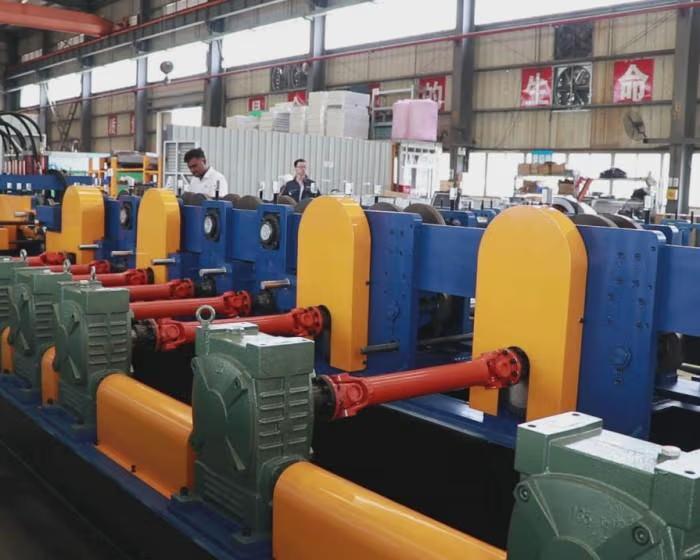
As manufacturing industries continue to rely on roll forming for producing high-quality steel components, maintaining efficient and reliable production remains a top priority. Roll forming offers significant advantages in terms of speed, consistency, and cost-effectiveness, but like any manufacturing process, it can present certain operational challenges.
Understanding these challenges and implementing effective solutions can help manufacturers improve productivity, reduce waste, and maintain consistent product quality. Modern equipment such as a cold formed steel machine incorporates advanced technologies that help address many common production issues, supporting smoother and more efficient manufacturing operations.
The Growing Importance of Efficient Roll Forming Operations
The demand for steel components continues to increase across construction, infrastructure, and industrial sectors. Manufacturers are expected to deliver products that meet strict quality standards while maintaining competitive production schedules.
Even small production issues can lead to delays, increased costs, and reduced efficiency. By identifying common challenges and adopting proactive solutions, manufacturers can improve operational performance and support long-term business success.
As competition within the industry grows, effective production management has become more important than ever.
Common Roll Forming Challenges and Their Solutions
Maintaining Consistent Product Quality
One of the most common challenges in roll forming is ensuring consistent profile dimensions throughout production. Variations in material properties, machine settings, or operating conditions can affect product quality.
Regular equipment calibration, proper machine maintenance, and continuous quality monitoring can help manufacturers maintain accurate and consistent production results.
Material Waste and Scrap Generation
Material waste can increase production costs and reduce overall efficiency. Inaccurate machine settings or improper material handling may contribute to unnecessary scrap.
Manufacturers can reduce waste by optimizing machine setup procedures, using precise control systems, and implementing effective quality control measures throughout production.
Equipment Downtime
Unexpected machine downtime can disrupt production schedules and impact profitability. Mechanical wear, inadequate maintenance, or equipment failures are common causes of production interruptions.
Preventive maintenance programs and routine inspections help identify potential issues before they lead to costly downtime.
Production Accuracy Issues
Accurate profile formation is essential for many construction and industrial applications. Inconsistent machine performance or incorrect settings may affect dimensional precision.
Modern production equipment with advanced monitoring and control systems can help improve accuracy and maintain stable production conditions.
Adapting to Changing Production Requirements
Manufacturers often need to produce different profile sizes and configurations to meet customer demands. Frequent production changes can sometimes create operational challenges.
Flexible equipment and efficient setup procedures help manufacturers adapt more easily while maintaining productivity and product quality.
Applications of Roll Forming Technology
Roll forming systems are widely used to manufacture components for:
- Industrial buildings
- Commercial construction projects
- Warehouses and distribution centers
- Agricultural structures
- Roofing systems
- Wall cladding applications
- Steel framing systems
- Infrastructure developments
These industries depend on efficient production processes and high-quality steel profiles to support successful project completion.
Choosing the Right Manufacturing Equipment
Many roll forming challenges can be minimized by selecting reliable and efficient production equipment. Manufacturers should evaluate factors such as machine accuracy, automation capabilities, production flexibility, maintenance requirements, and long-term durability.
Businesses investing in a cold formed steel machine should consider its ability to deliver consistent profile quality and efficient production performance. Similarly, a curving machine can provide added flexibility for producing specialized steel components while maintaining accuracy and productivity.
Choosing advanced equipment can help manufacturers overcome common production challenges and improve overall operational efficiency.
Conclusion
While roll forming offers numerous advantages, manufacturers may encounter challenges related to quality control, material waste, equipment downtime, production accuracy, and changing production requirements. Addressing these issues through proper maintenance, process optimization, and advanced technology can significantly improve manufacturing performance.
Whether utilizing a cold formed steel machine for steel profile production or a curving machine for specialized applications, modern manufacturing solutions help businesses overcome operational challenges and maintain efficient production processes. As industry demands continue to evolve, effective problem-solving and continuous improvement will remain essential for success in roll forming manufacturing.